The Mechanism Atlas
64 mechanisms, every arrow explained.

Mechanism sheets, synthesis maps and step-by-step solved problems for first-year med, pharmacy and biology students who are stuck on organic chemistry. You learn to read each arrow, so you stop memorising reactions.
One payment, no subscriptionInstant PDF download14 days to ask for a refund
The Orgowise method
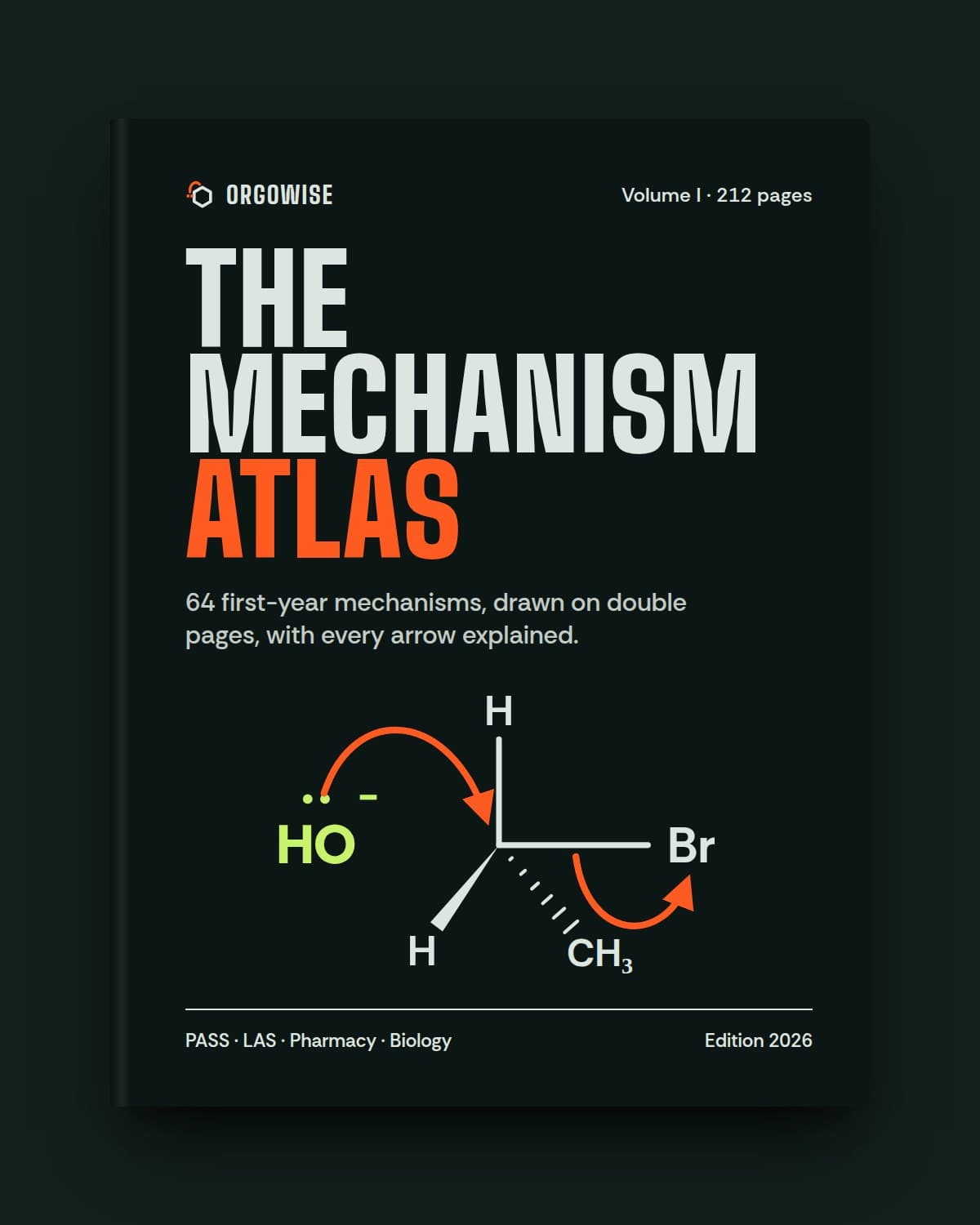
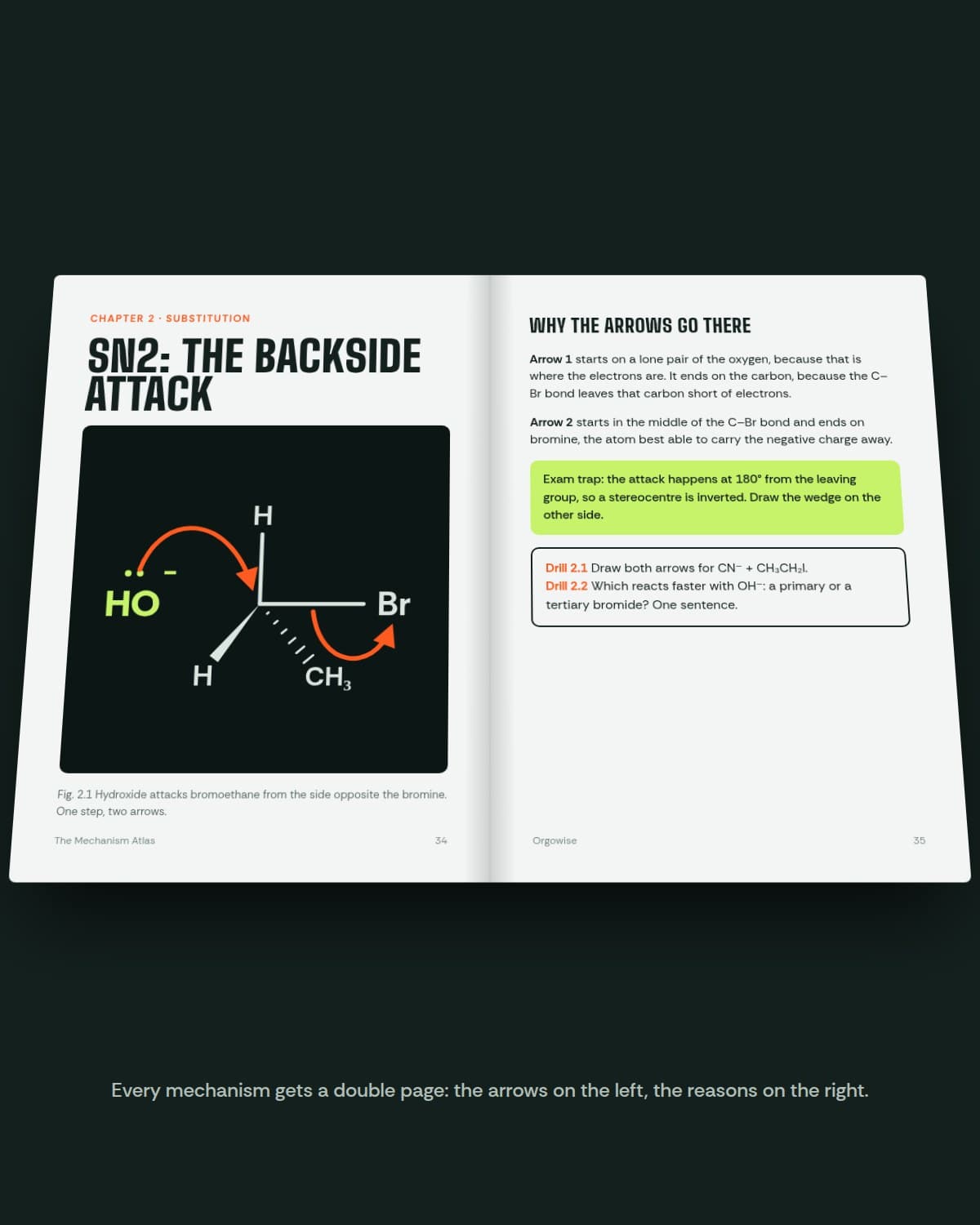
Every mechanism starts at a lone pair or a π bond. Here, the oxygen of hydroxide carries a negative charge and three lone pairs. That's your nucleophile, and it's drawn in lime in every Orgowise ebook.
The first arrow leaves the lone pair and lands on carbon, the atom that bromine has left short of electrons. You don't memorise this arrow. You read it from the charges.
The second arrow breaks the C–Br bond and gives both electrons to bromine. One negative charge comes in, one leaves. If the charges balance, your mechanism is right.
The one students keep open all year
64 mechanisms, every arrow explained. Two pages per mechanism, the reasons next to the arrows, and the trap examiners set on each one.
Short guides for one topic you keep failing, or the Atlas and Exam Room for the whole year. Every ebook is a PDF you keep for good.
64 mechanisms, every arrow explained.
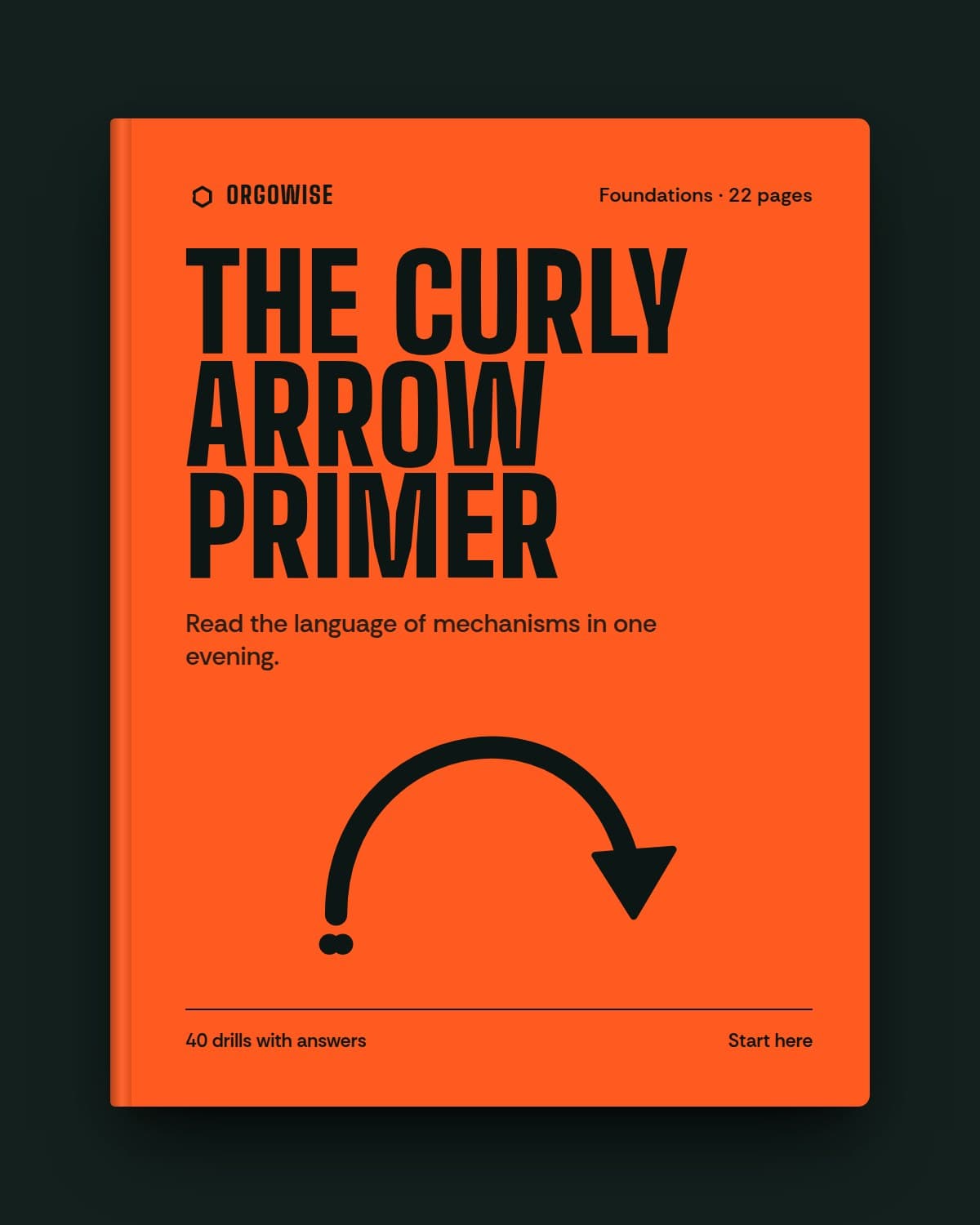
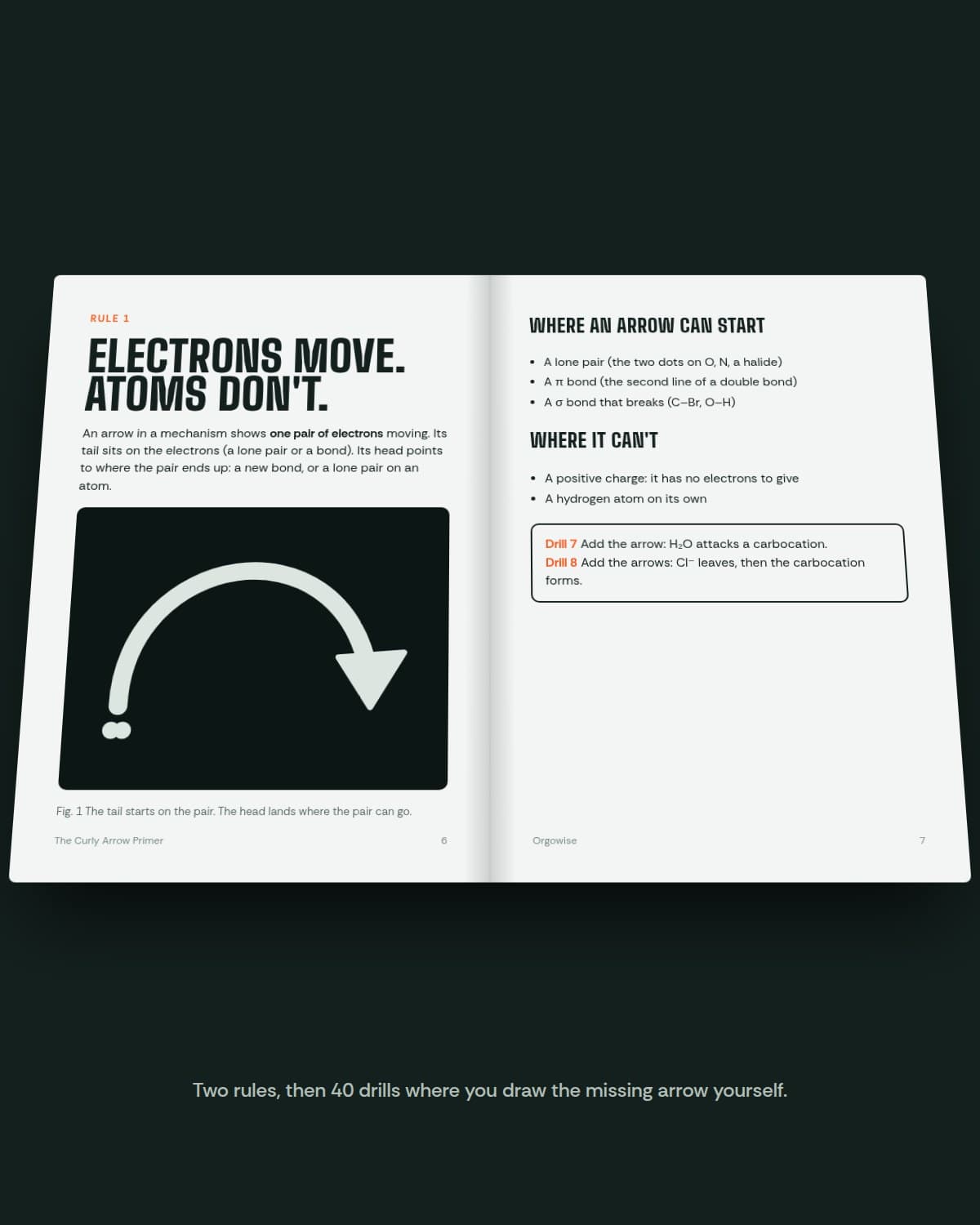
Learn to read arrows in one evening.
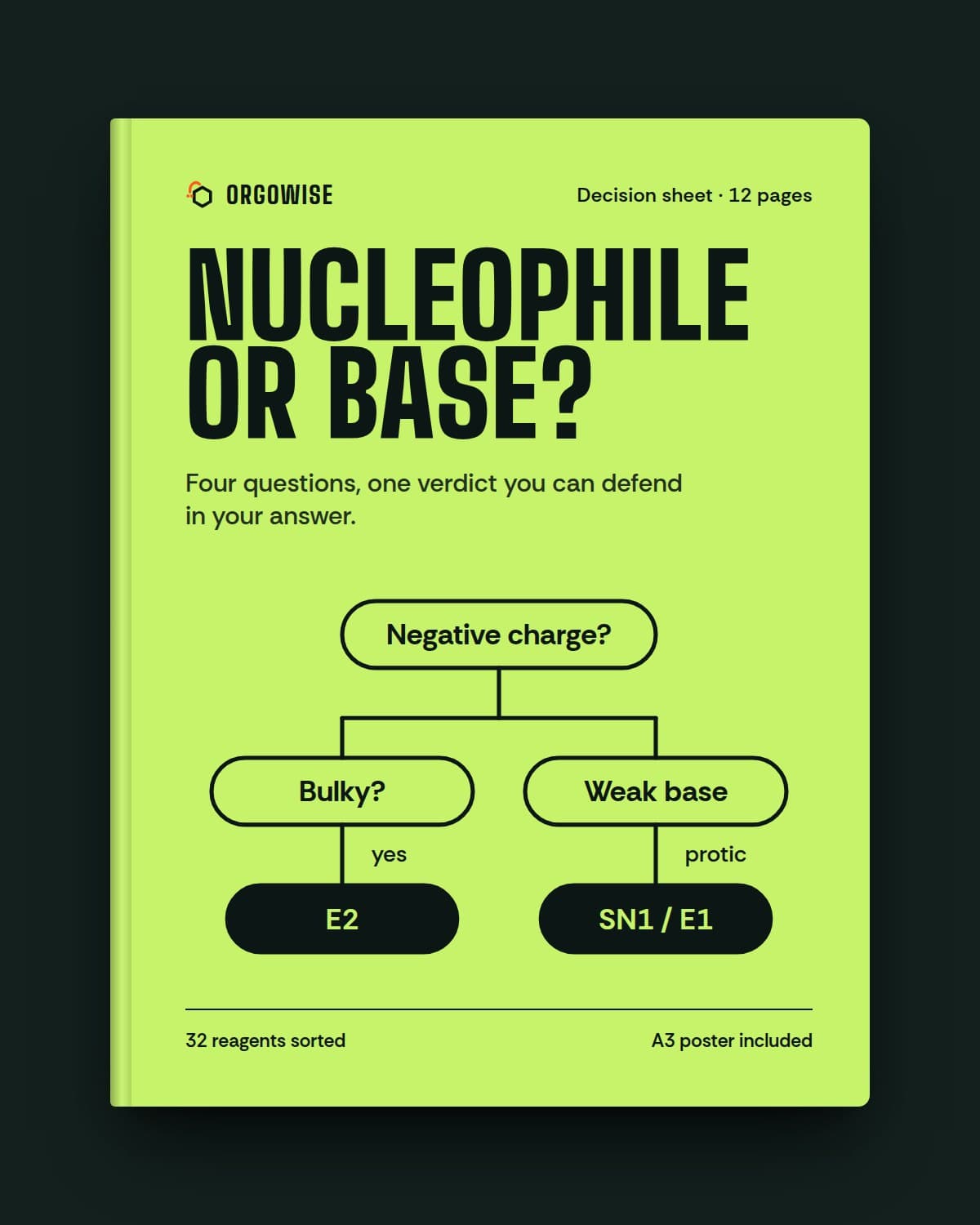
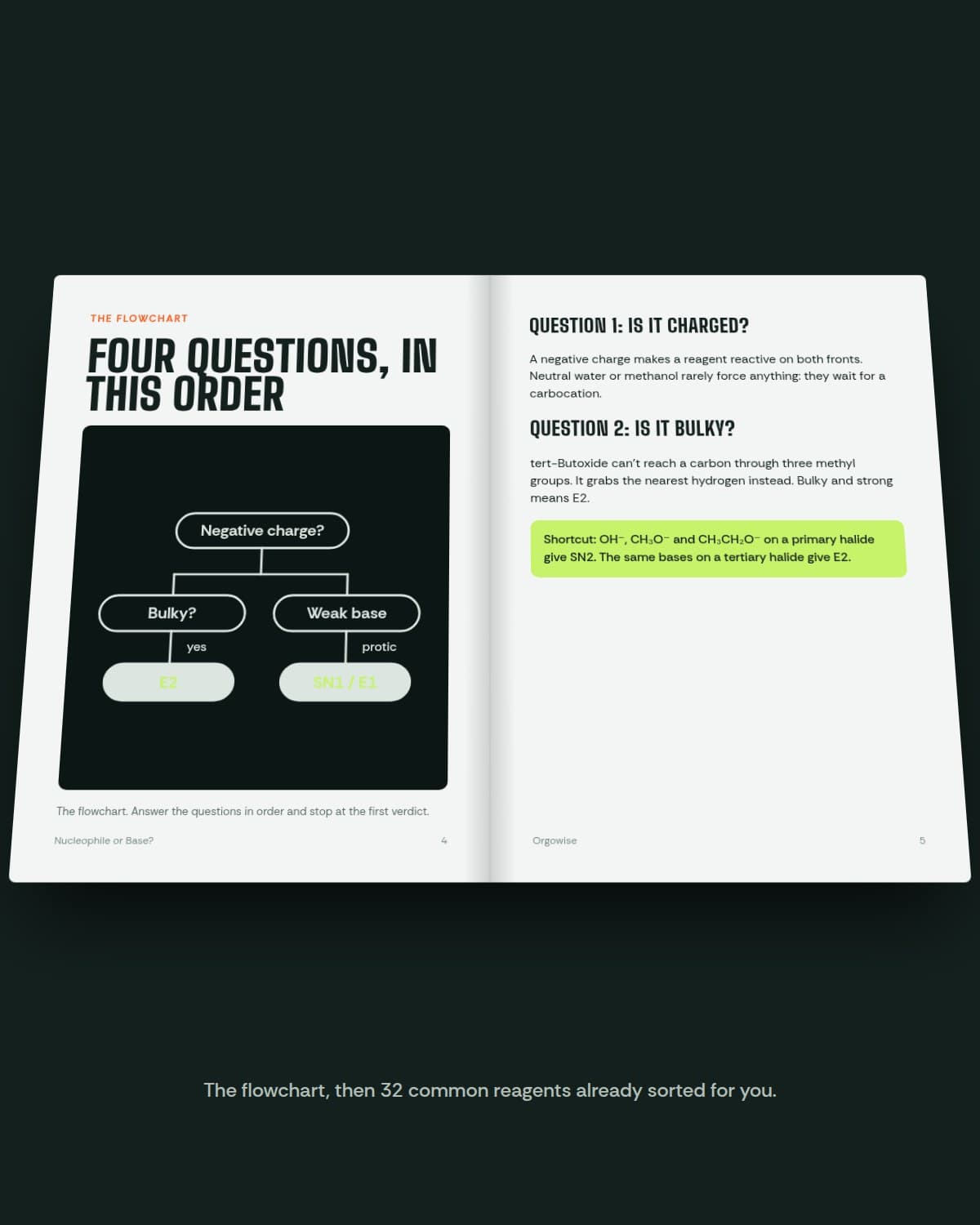
One flowchart that settles the question.
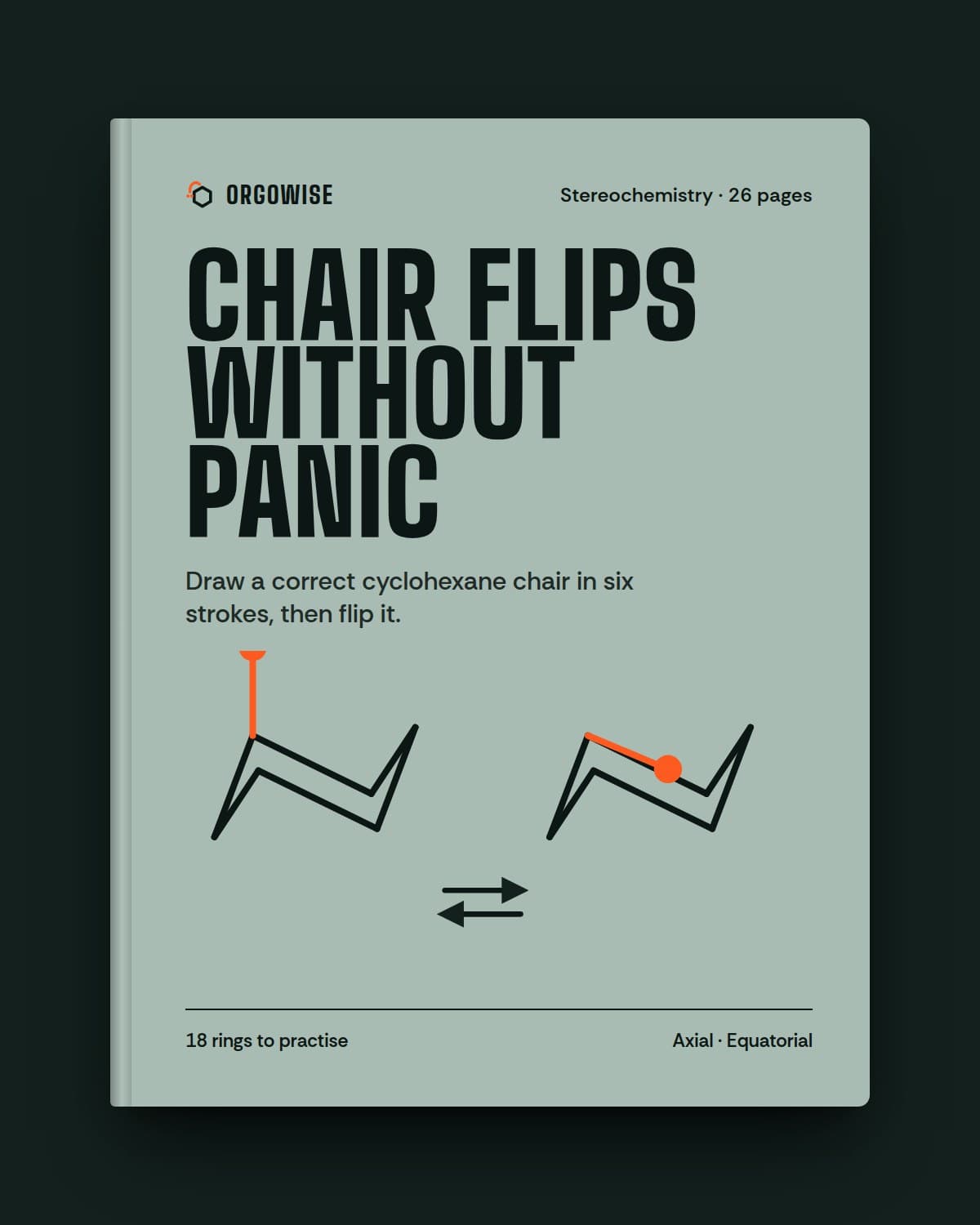
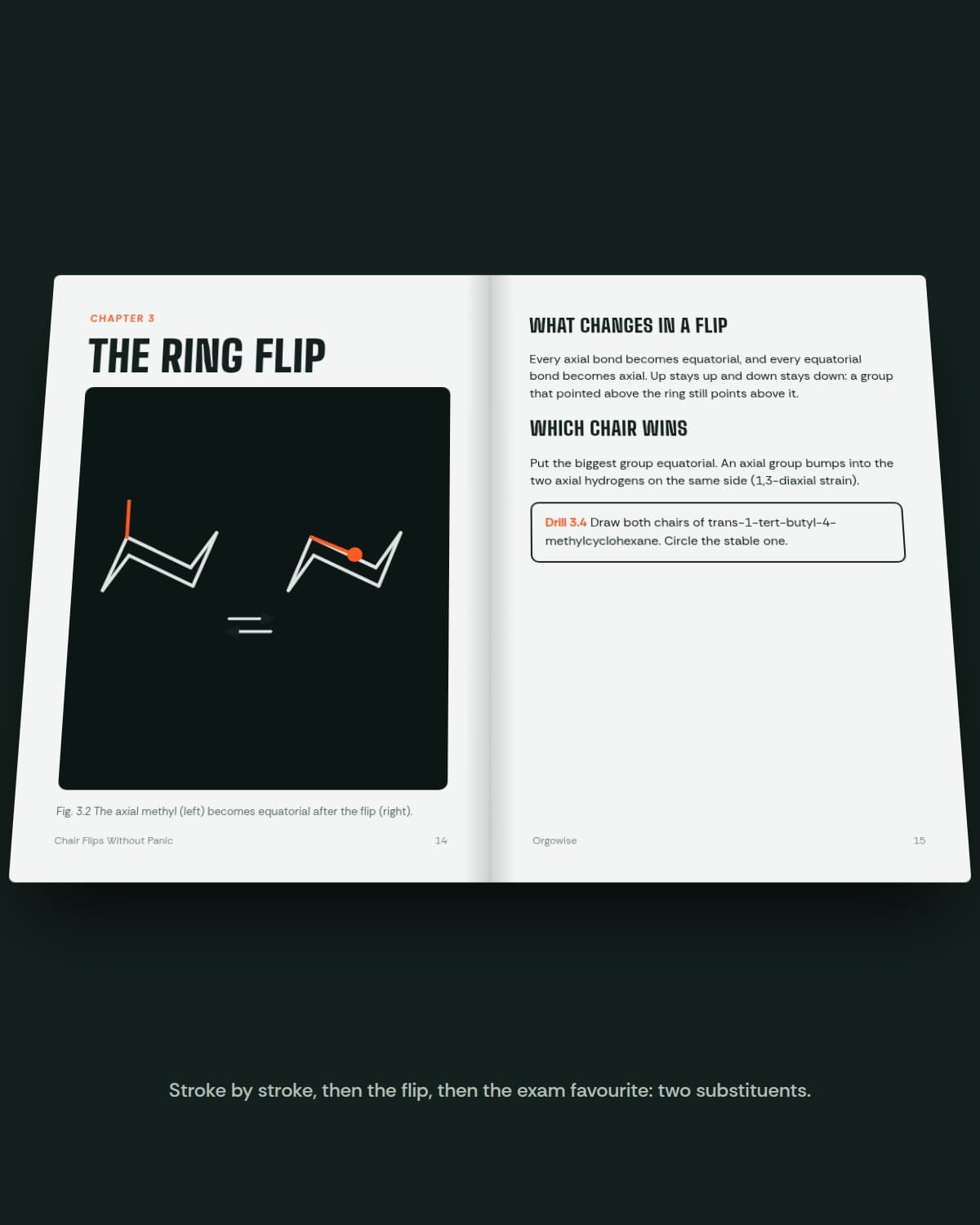
Draw a correct chair in 20 seconds.
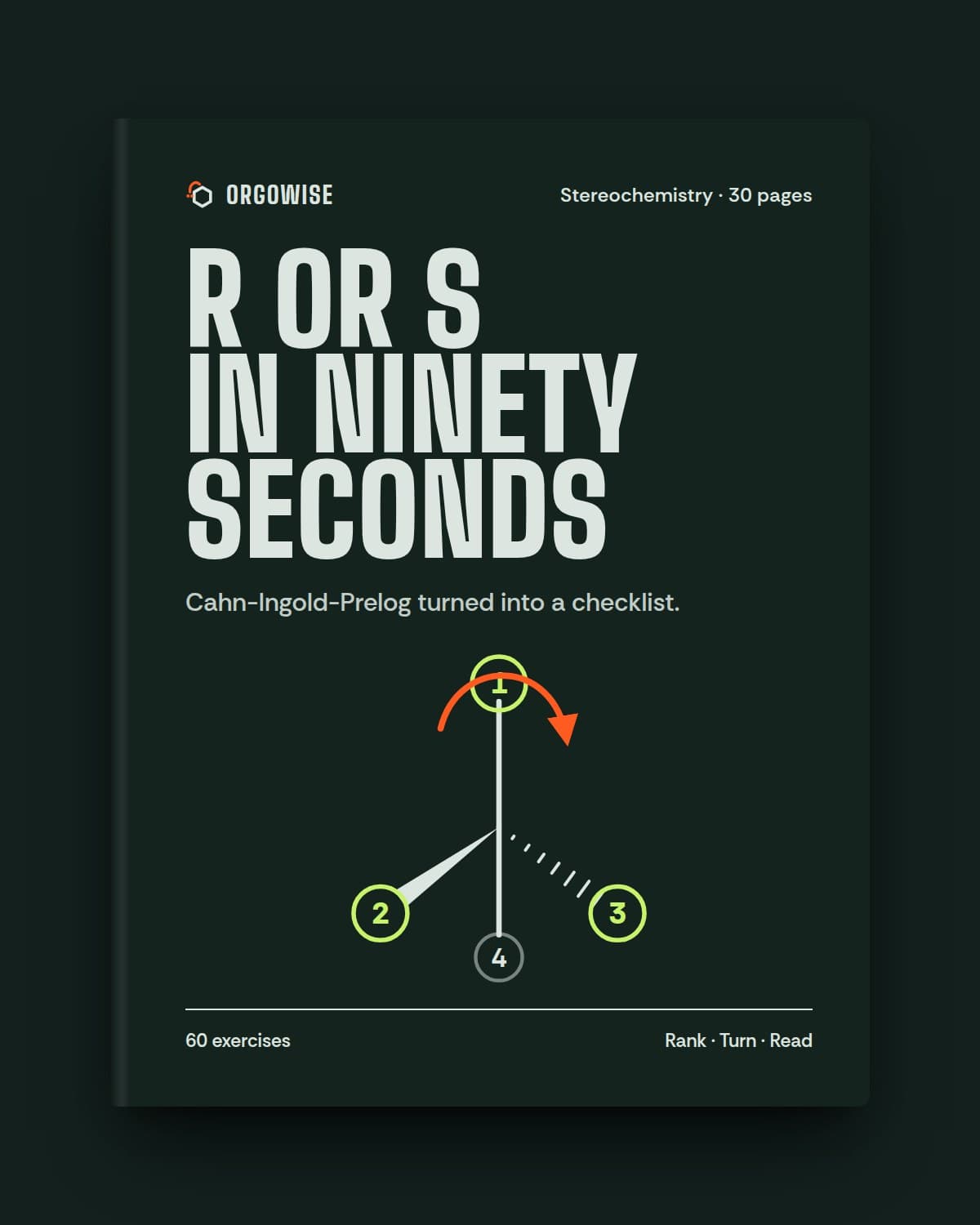
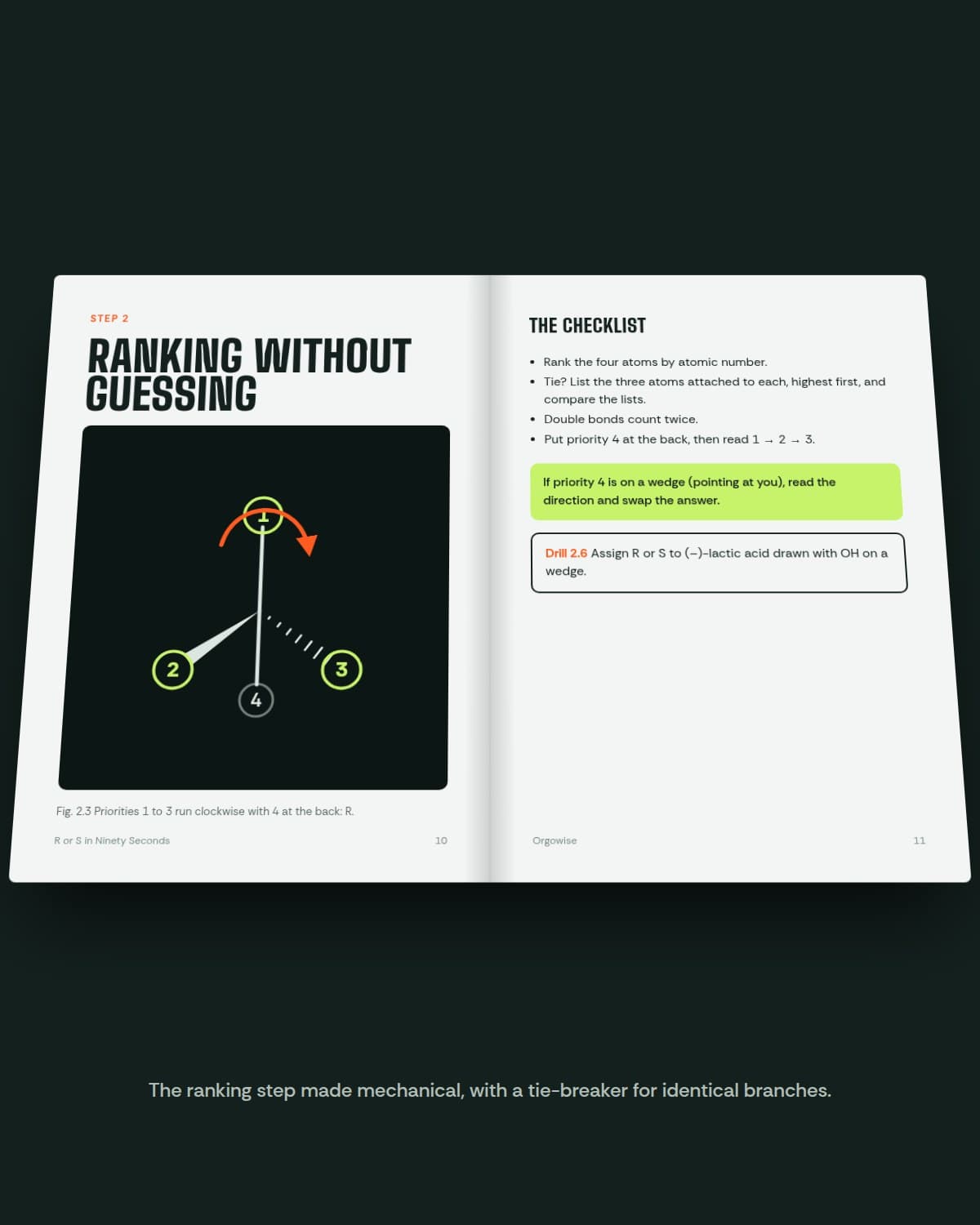
Rank, turn, read. Done.
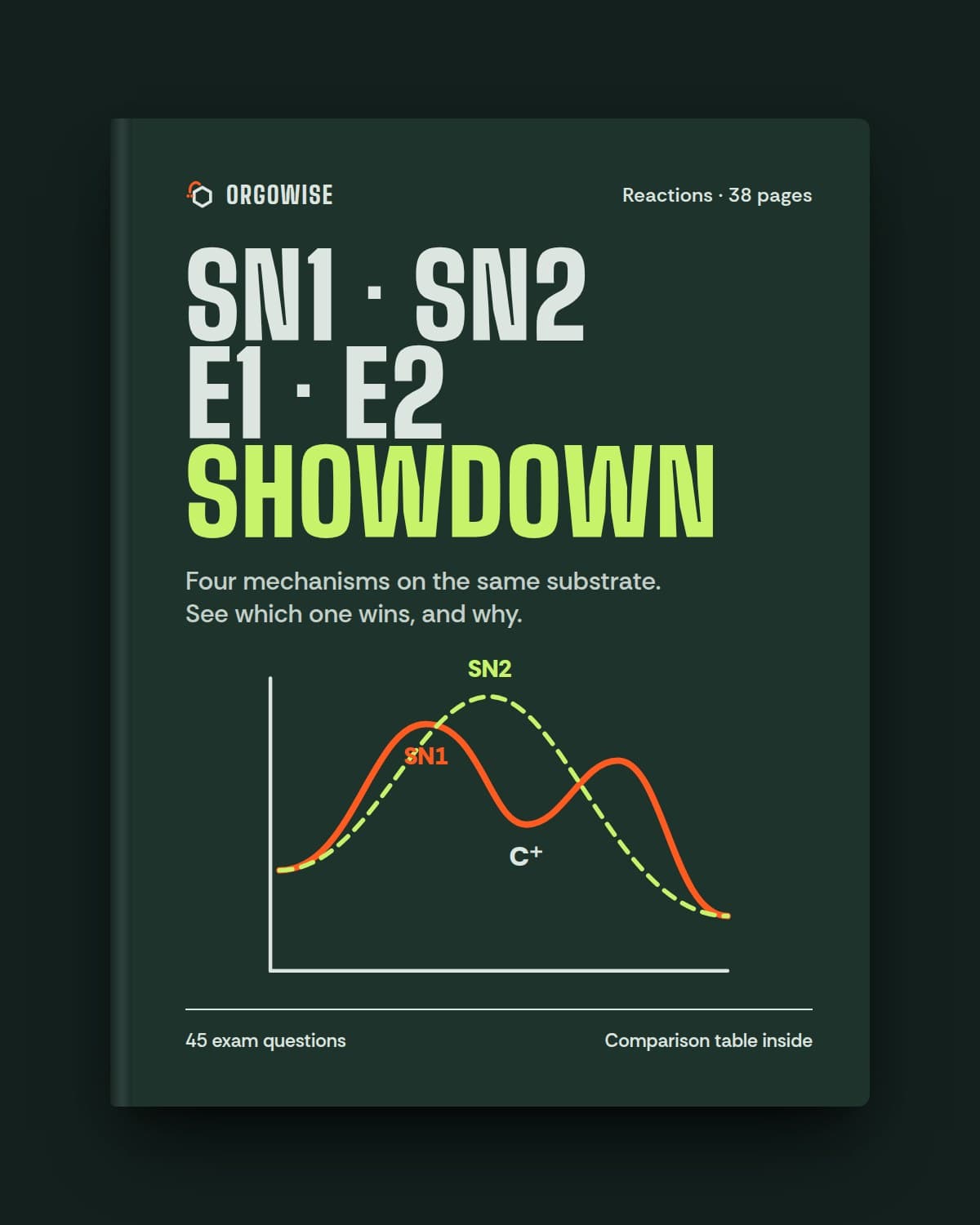
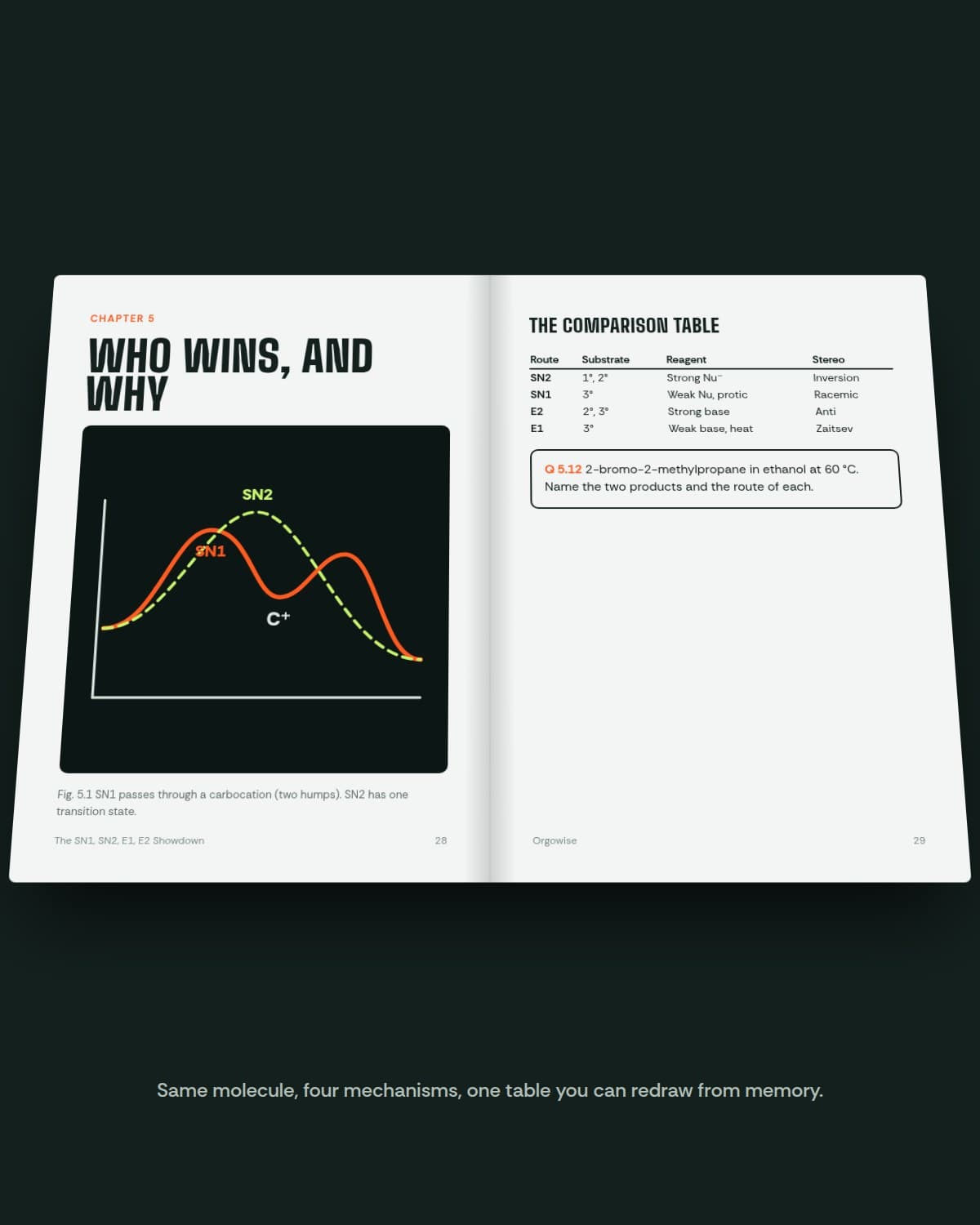
Four mechanisms, one substrate, one winner.
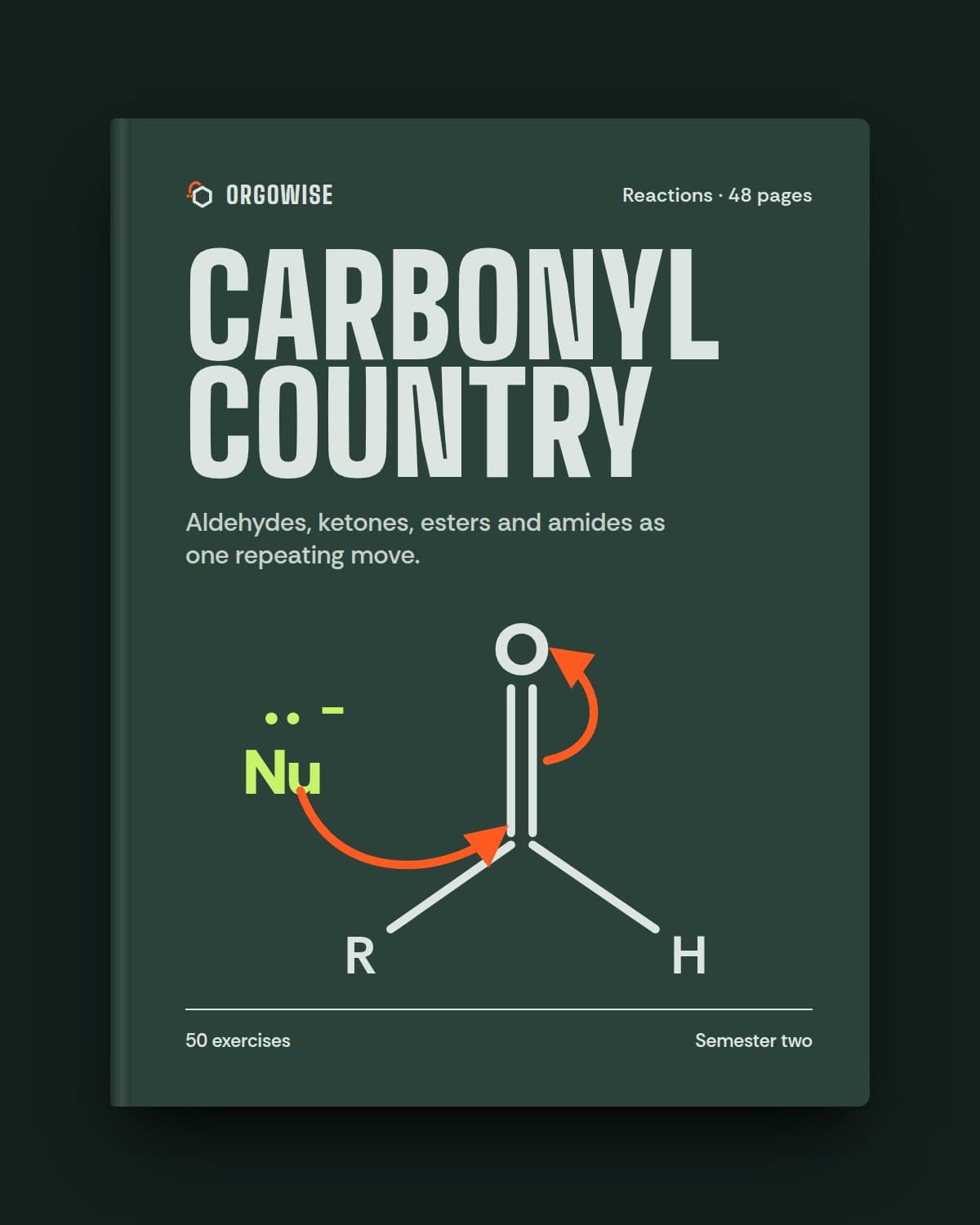
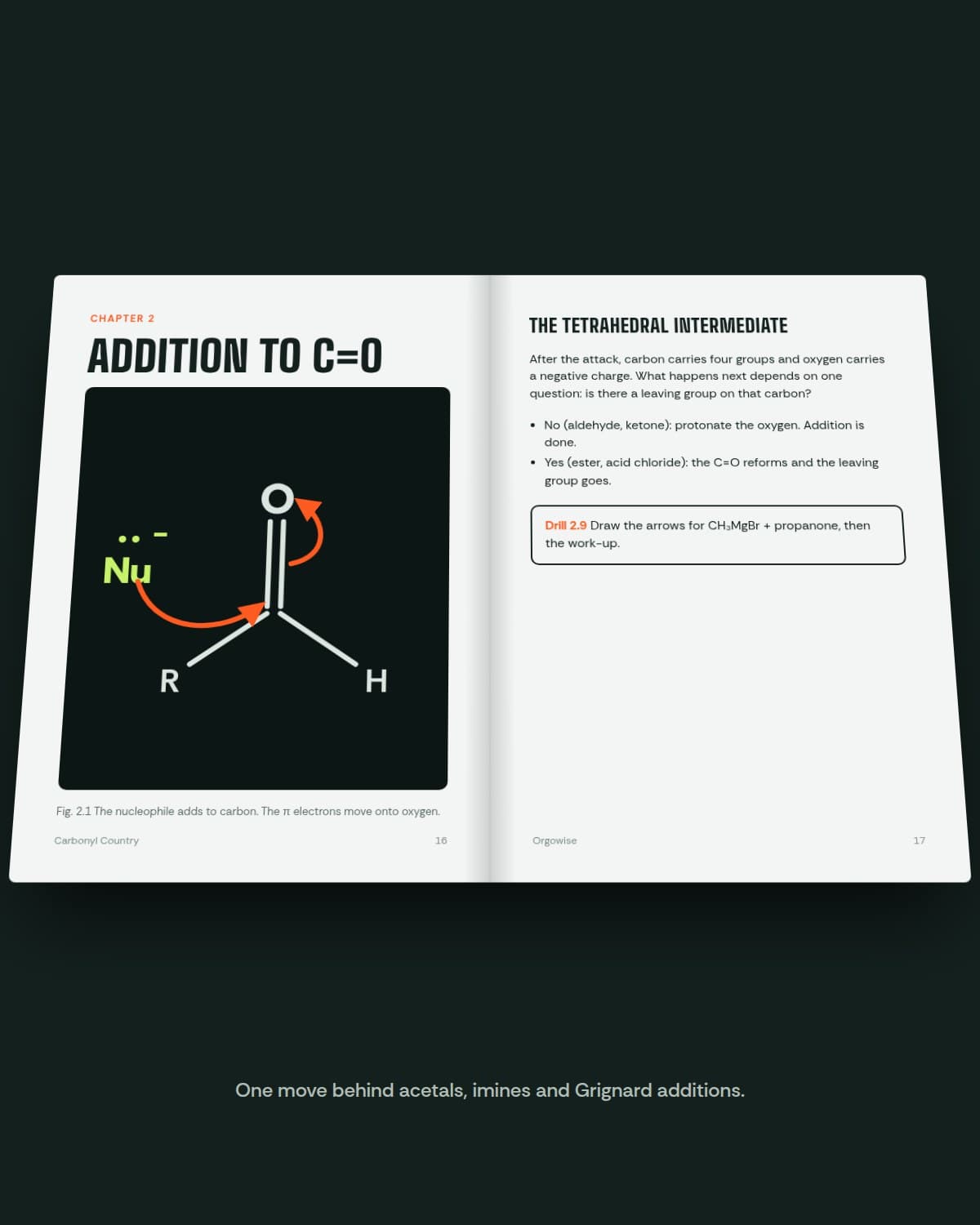
Half your second semester is one bond.
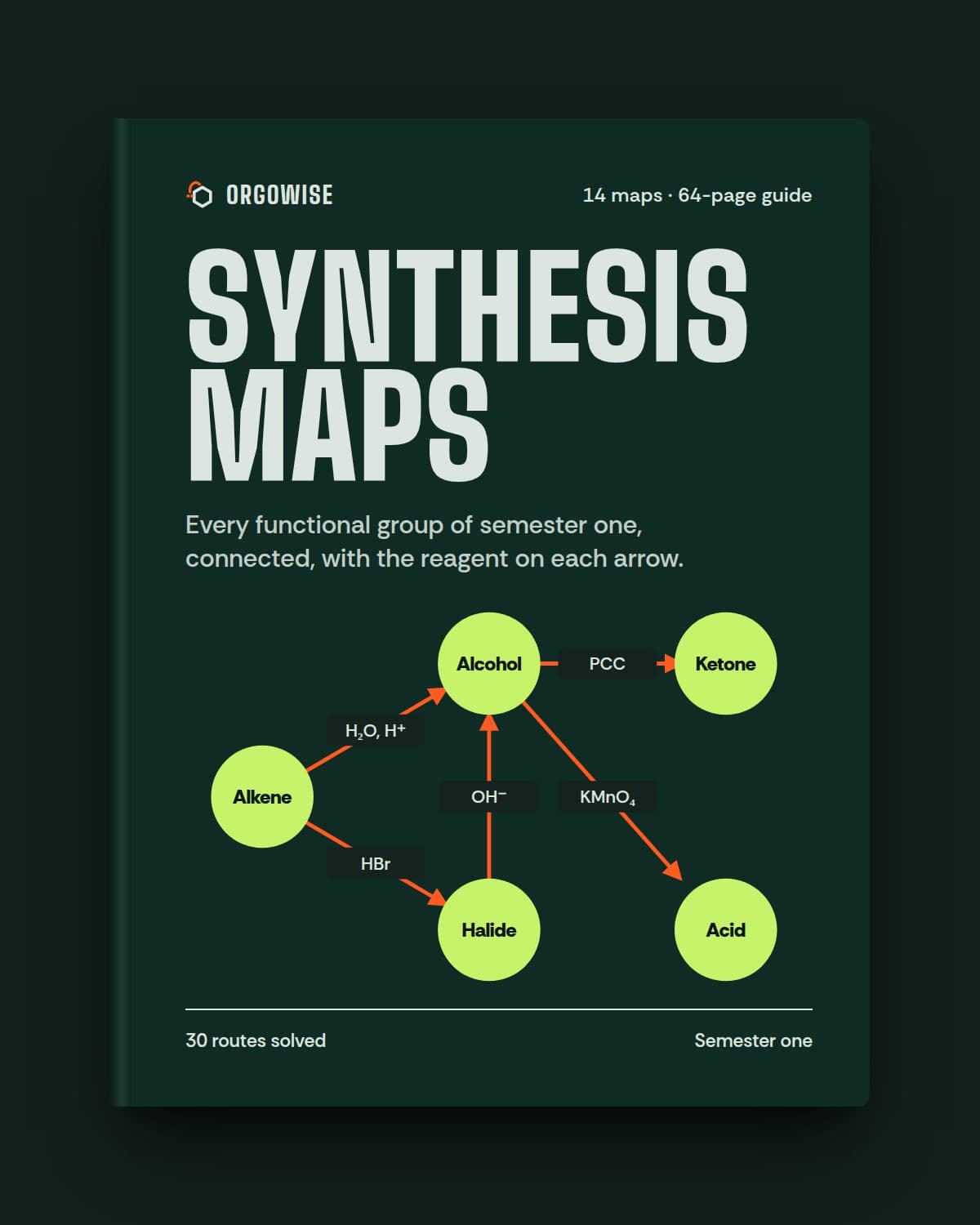
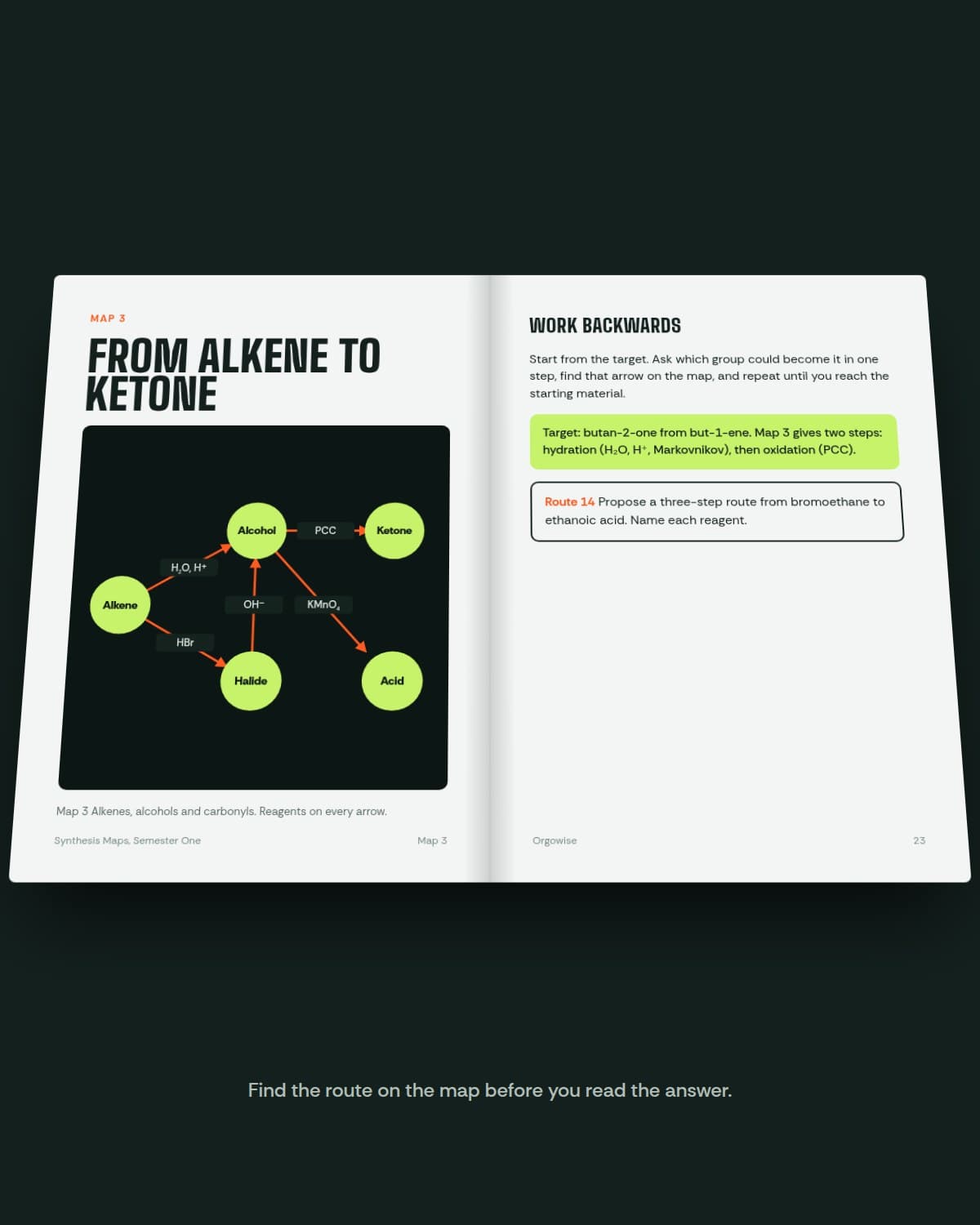
Every functional group, connected.
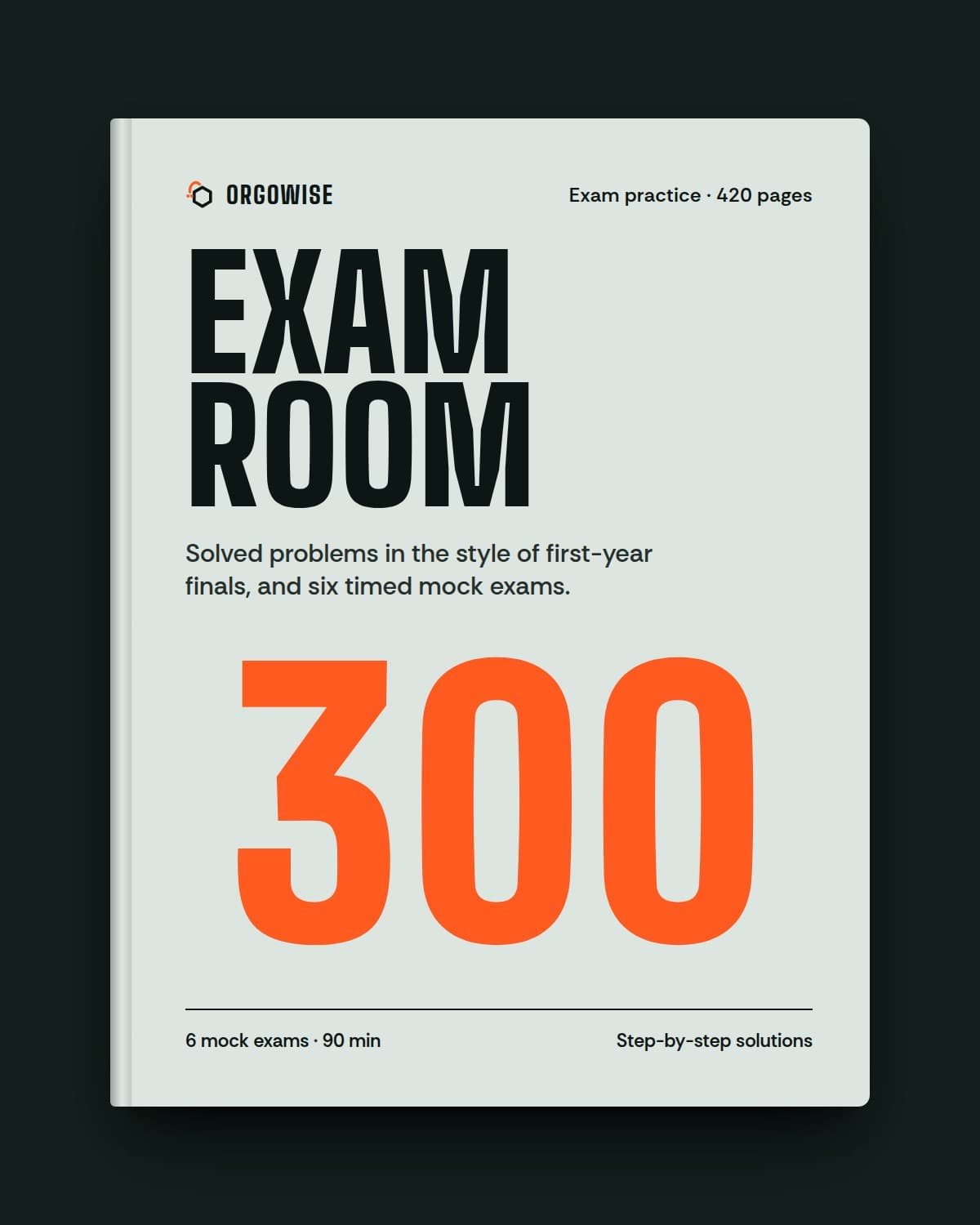
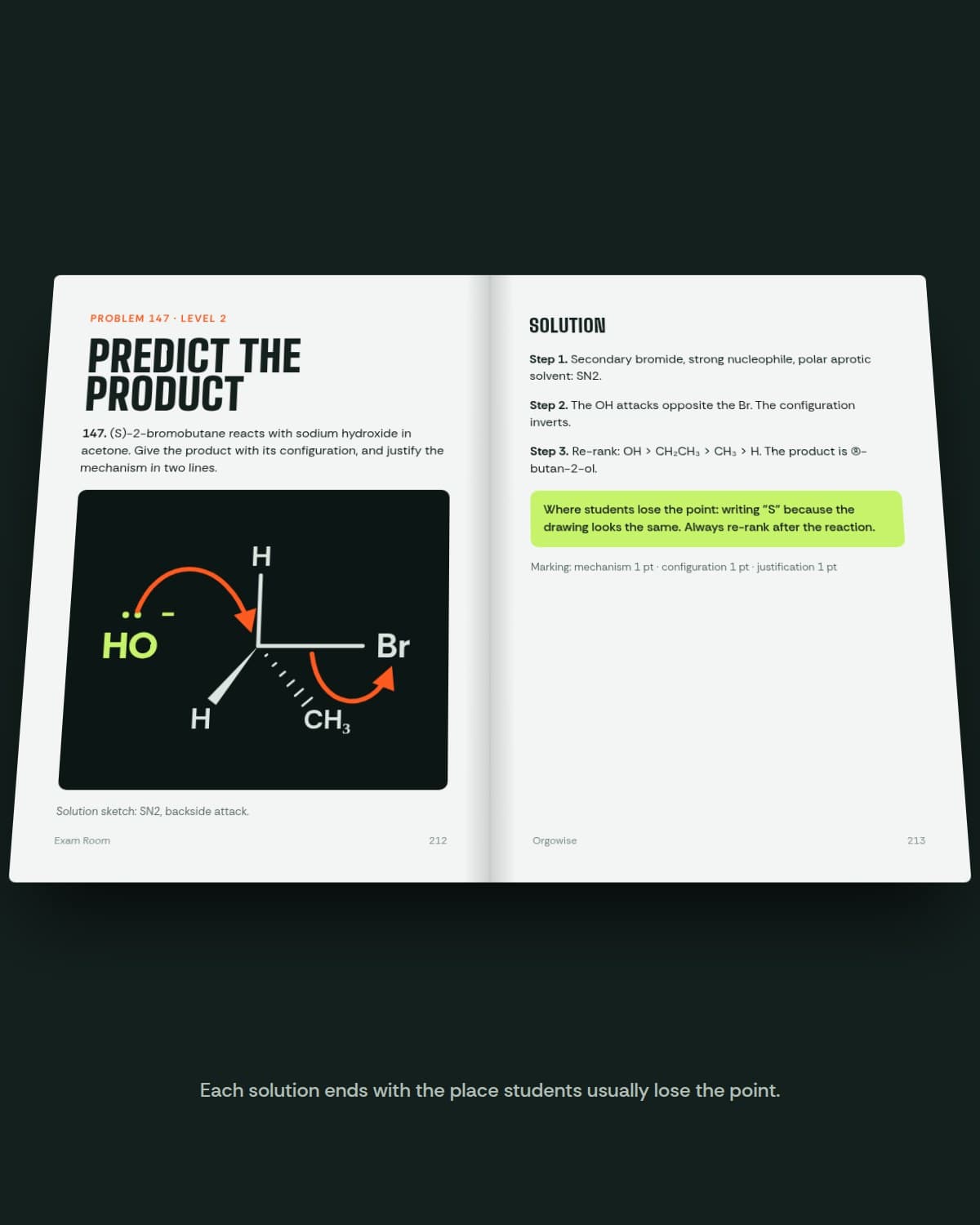
The paper will look familiar.
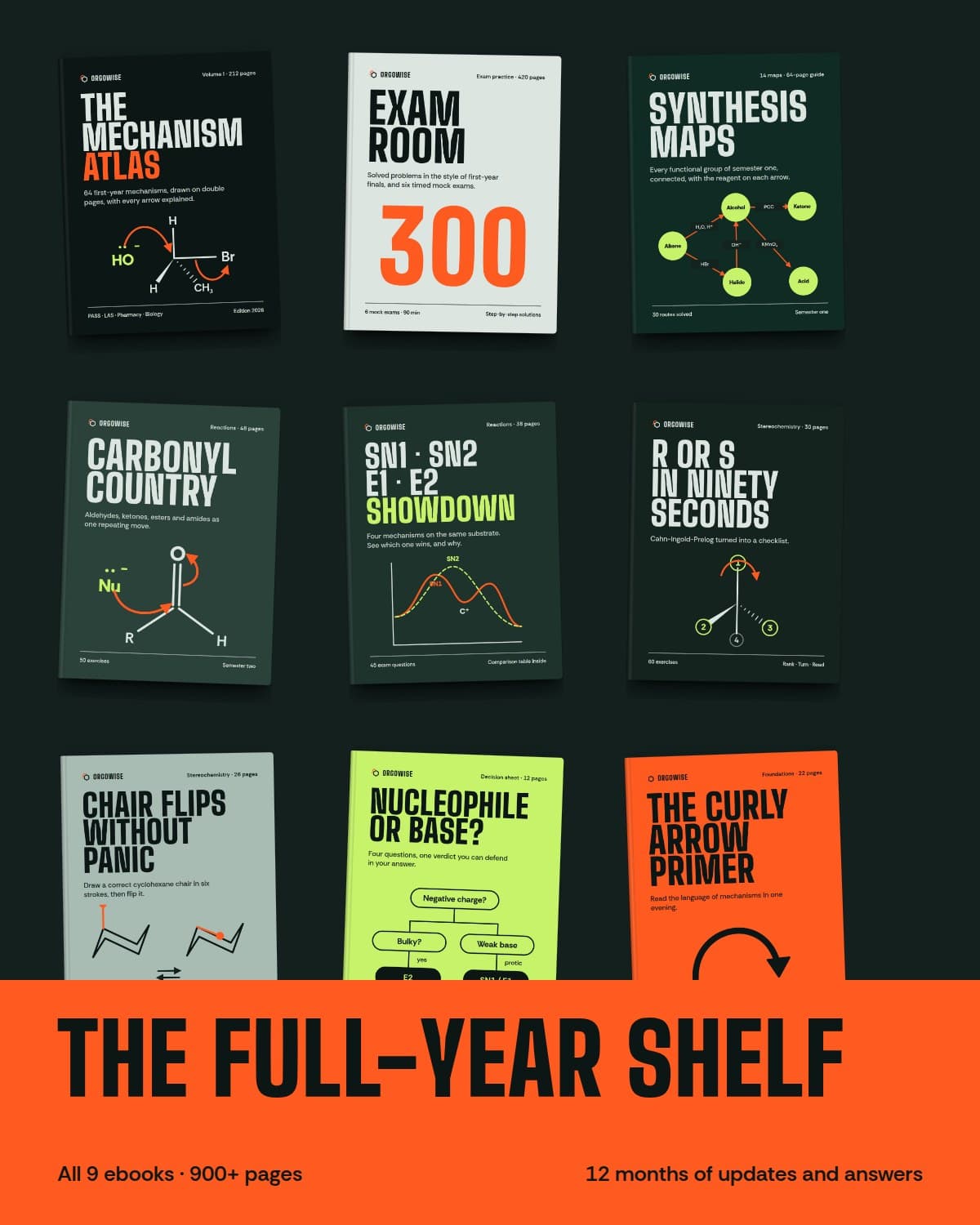
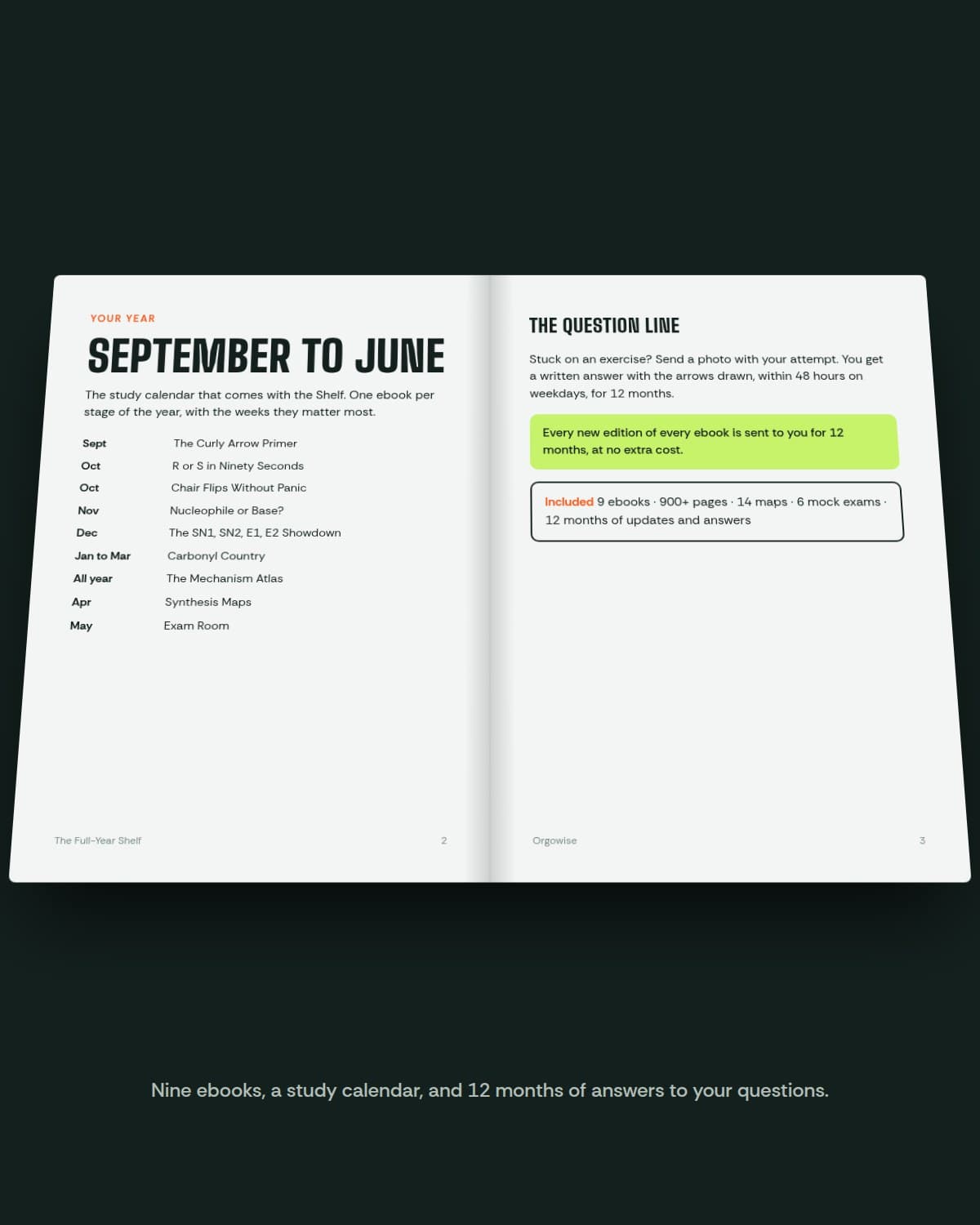
The whole year, from first arrow to last exam.
Every mechanism is sketched on paper, redrawn, then tested on first-year students before it goes into an ebook. When they hesitate on an arrow, the page changes.
How the ebooks are madeWhat happens once you click Pay, written down so you can hold us to it.
I had flashcards for 70 reactions and still froze on any molecule I hadn't seen. The Atlas made me redraw the arrows instead of reciting them. By February I was doing the synthesis questions first.
The SN1 and SN2 pages are on the same substrate, side by side. That's the thing my lecture never did. I printed the comparison table and it lived in my pencil case until the exam.